


The ketogenic diet contains approximately 90-99% of calories from fat and protein, and only 1-10% from carbohydrates.This type of diet may have some benefits for weight loss or reducing the number of seizures. However, a new study finds that following a ketogenic diet only provides health benefits for a short period of time (1-2 weeks) before its negative effects begin to appear.
What is the keto diet?
The ketogenic diet (or keto diet for short) is a very low-carb, high-fat diet that may have some health benefits.
More than 20 studies show this diet can help you lose weight and improve your health.The ketogenic diet may even have some benefits against diabetes, brain cancer, epilepsy, and Alzheimer's disease.
The ketogenic diet is a very low-carb (no more than 1-10%), high-fat diet that has many similarities to the Atkins diet and low-carb diets.Following this diet results in a drastic reduction of carbohydrates and their replacement with fat and protein.This greatly reduces the body's use of carbohydrates and switches the body to using fat as its primary source of energy.If there is little glucose in the body, the liver processes fat into fatty acids and ketone bodies.
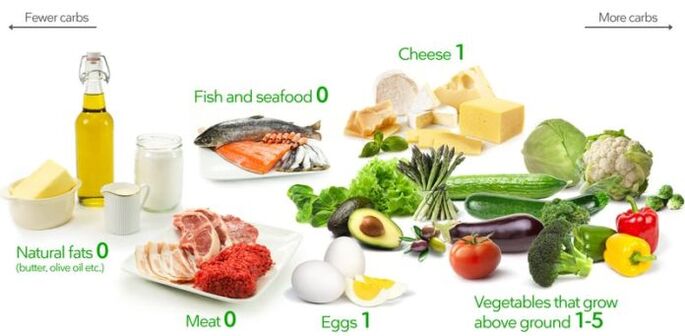
Ketosis occurs when the amount of ketone bodies in the body increases and the brain begins to use these ketone bodies in place of carbohydrates.When this happens, the body becomes very efficient at burning fat for energy.
The ketogenic diet can significantly lower blood sugar and insulin levels.This, combined with an increase in ketone levels, shows some beneficial benefits for the body.
However, the ketogenic diet can be potentially dangerous for people with type 1 diabetes.
Benefits of the keto diet
One study of 63 people was divided into two groups: a low-fat diet group or a low-carb diet group.People on a low-fat diet have limited calories.The study lasted 12 months.
The low-carb group lost more weight, 7.3 percent of their total body weight, while the low-fat group lost 4.5 percent.The difference was statistically significant at 3 and 6 months, but not at 12 months.At the end of the experiment, there were no differences in body weight between the groups.
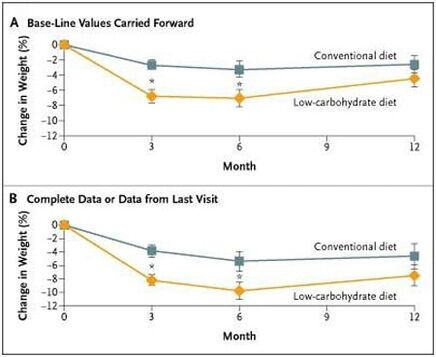
Notably, blood levels of triglycerides and HDL were elevated in the low-carbohydrate (keto diet) group, but other biomarkers were similar between groups.
If we analyze the 23 known human clinical studies that evaluate the effects of a low-carbohydrate diet (keto diet), we can draw general conclusions from these studies.Most studies achieved statistically significant differences in weight loss (always favoring low-carb diets).
There are some other factors worth noting:
- Low-carb diets typically result in 2-3 times more weight loss than low-fat diets.In some cases, there are no significant differences.
- In most cases, the low-fat group was calorie-restricted, while the low-carb group could eat as much as they wanted.
- When all subject groups were caloric restricted, the low-carbohydrate diet still showed greater weight loss, although this was not always significant.
- Only one study showed greater weight loss in the low-fat diet group, although the difference was small (0.5 kg) and not statistically significant.
- In some studies, early weight loss has the greatest effect.Over time, people begin to regain weight after stopping the ketogenic diet.
- When scientists looked at the amount of belly fat (bad visceral fat), low-carb diets had a clear advantage in reducing this type of fat.
Two of the main reasons why a low-carb diet (keto diet) is so effective for weight loss is the high protein content of the food and the appetite-suppressing effects of this style of eating.This results in a drastic reduction in calorie intake.
Harmful Effects of the Keto Diet
Clinical studies have shown that a ketogenic diet can improve a person's health over a short period of time (up to 12 months) by reducing the risk of type 2 diabetes by reducing inflammation caused by fat cells.
A study conducted at Yale University found that the positive and negative effects of diet are related to the behavior of immune cells called gamma delta T cells (γδ T cells), which are tissue-specific cells that reduce the risk of diabetes and inflammation.
γδT cells are immune T cells that possess a unique T cell receptor (TCR) on their surface.Most T cells are αβ (alpha beta) T cells, whose TCR consists of two glycoprotein chains called α (alpha) and β (beta) TCR chains.In contrast, the TCR of gamma delta (γδ) T cells consists of a gamma (gamma) chain and a delta (delta) chain.This group of T cells tends to be less numerous than αβ T cells (approximately 4–10% of all T cells), but is most abundant in the intestinal mucosa in a population of lymphocytes called intraepithelial lymphocytes (IELs).
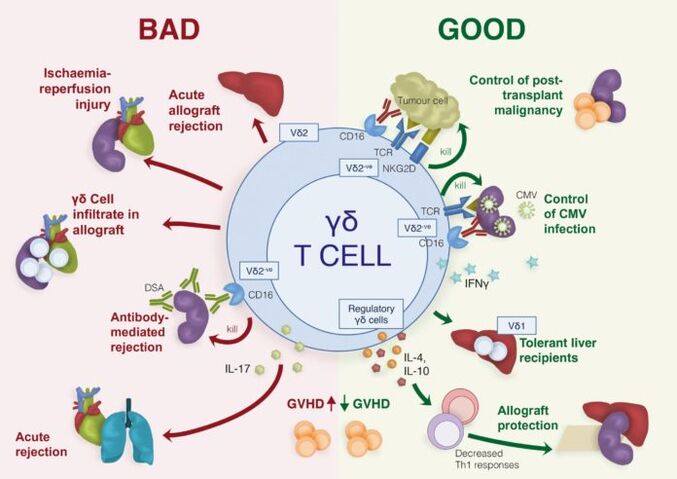
Gamma-delta immune T cells have a number of characteristics that place them within the boundaries of the evolutionarily more primitive innate immune system, which provides a rapid response to a variety of pathogens, and the adaptive immune system, in which lymphocytes coordinate their actions much more slowly.At the same time, (γδ) T cells have long-term memory capabilities so that they can respond faster when encountering pathogens again in the future.
A ketogenic diet increases the presence and decreases immune (γδ) T cells in adipose tissue
The ketogenic diet tricks the body into burning fat, said study author Dr. Vishwa Deep Dixit of Yale University School of Medicine.When the body's glucose levels are low due to food being low in carbohydrates, the body behaves as if it is in a fasted state (even though it is not) and begins to burn fat instead of carbohydrates.
This causes the body to utilize beta-hydroxybutyrate (β-hydroxybutyrate) to produce ATP and reduce inflammation mediated by NLRP3, a cytosolic protein involved in the activation of the inflammatory interleukins IL-1b and IL-18.
The process of reducing carbohydrates in food in turn begins to produce ketone bodies (ketones) as an alternative fuel source.As the body burns ketone bodies, protective γδT cells spread throughout the body.The number of these protective immune cells in fat tissue decreases dramatically.As γδ T cells decrease in adipose tissue, the levels of inflammation these cells previously contained begin to increase.Inflammation is known to stimulate the accumulation of fat cells.
Furthermore, mice lacking immune γδ T cells exhibit impaired glucose homeostasis, resulting in elevated blood glucose levels.
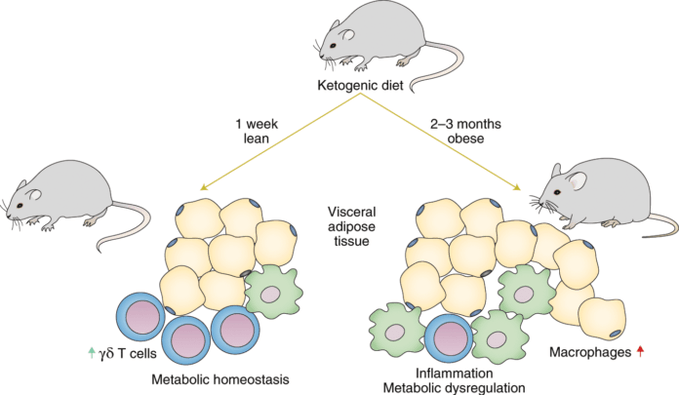
Scientists point out that a ketogenic diet can reduce the risk of diabetes and inflammation and can also improve the body's metabolism.After a week on the ketogenic diet, the mice had reduced blood sugar and inflammation.
But scientists have found that when the body is in this "hungry, not hungry" mode for long enough (more than 1-2 weeks), fat accumulation and breakdown occur simultaneously.When the mice continued to eat a high-fat, low-carbohydrate diet, they consumed more fat than their bodies could burn.Then signs of diabetes and obesity begin to increase.
Keto Diet Side Effects
Although the ketogenic diet is safe for healthy people, you may experience some initial side effects as your body adjusts to the new diet.
This manifestation is often called "keto flu" and usually ends within a few days.Ketosis flu includes low body energy and impaired mental function, increased hunger, sleep problems, nausea, digestive discomfort, and decreased performance during exercise.
To minimize this, you can start a low-carb diet for the first few weeks.This trains your body to burn more fat before completely eliminating carbs from your diet.
The ketogenic diet can also change the body's water and mineral balance, so adding extra salt to meals or taking mineral supplements may help.Try taking 3,000-4,000 mg of sodium (salt), 1,000 mg of potassium, and 300 mg of magnesium daily to reduce side effects.